VerID Online Identity Verification System: Keeping Your Business and Customers Safe from Modern Cyber Threats
Blinking, smiling, or moving your head on camera isn't enough anymore. Here is how bad actors spoof facial scans, and how VerID stops them.
อ่าน 1 นาที
แชร์
Lately, we've all been seeing more news about scammers trying to bypass facial recognition checks to drain accounts, haven't we?
Most people assume that as long as you're blinking, smiling, or moving your head on camera, you're totally secure. But honestly, the tech on the attacker's side has evolved way faster than many realize.
How bad actors spoof facial scans
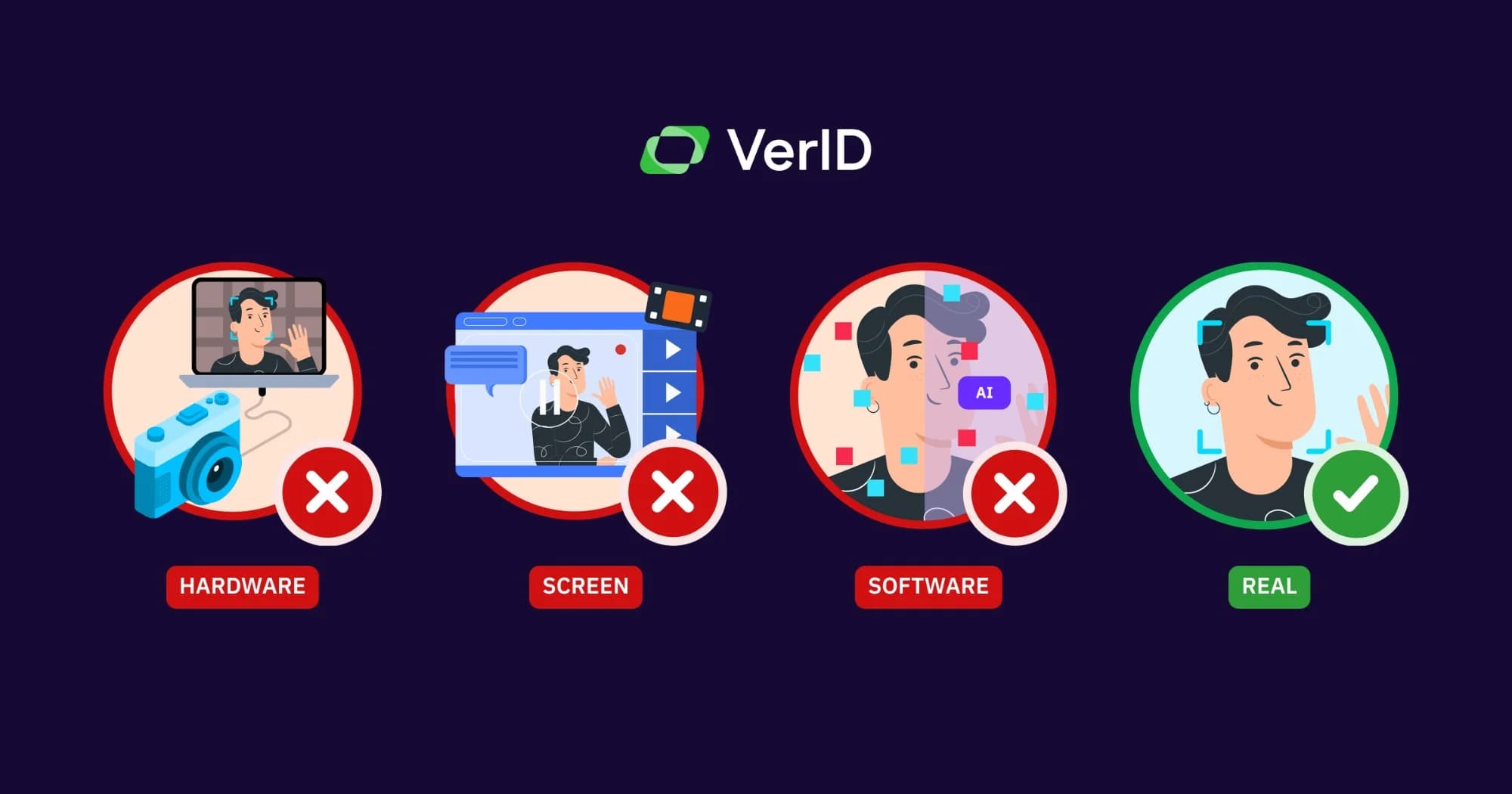
Here is a quick breakdown of the main ways bad actors try to spoof facial scans and how we put a stop to them.
Injection attack
Instead of using a live camera feed, attackers bypass hardware controls altogether using tools like HDMI feeds or modified plug-in cameras to stream pre-recorded video directly into the system.
Screen replay
Attackers take a recorded video or a video call running on another device and play it directly in front of a live lens to trick the system into thinking a real person is present right then.
Deepfake
The attacker points a real camera at themselves, but uses a virtual camera setup combined with real-time AI face-swapping. The result looks so convincing that the human eye can barely spot the difference.
A multi-layered defense from VerID
At VerID, we designed a multi-layered defense to tackle all three vectors at once:
- Verifying camera feed hardware integrity
- Detecting screen-glare artifacts
- Analyzing subtle facial lighting and micro-textures with AI
Only a real person behind a real camera gets through.
Because when it comes to protecting customer identities, every layer matters! Interested in bringing smooth, leak-proof identity verification to your business? Drop the VerID team a message anytime.